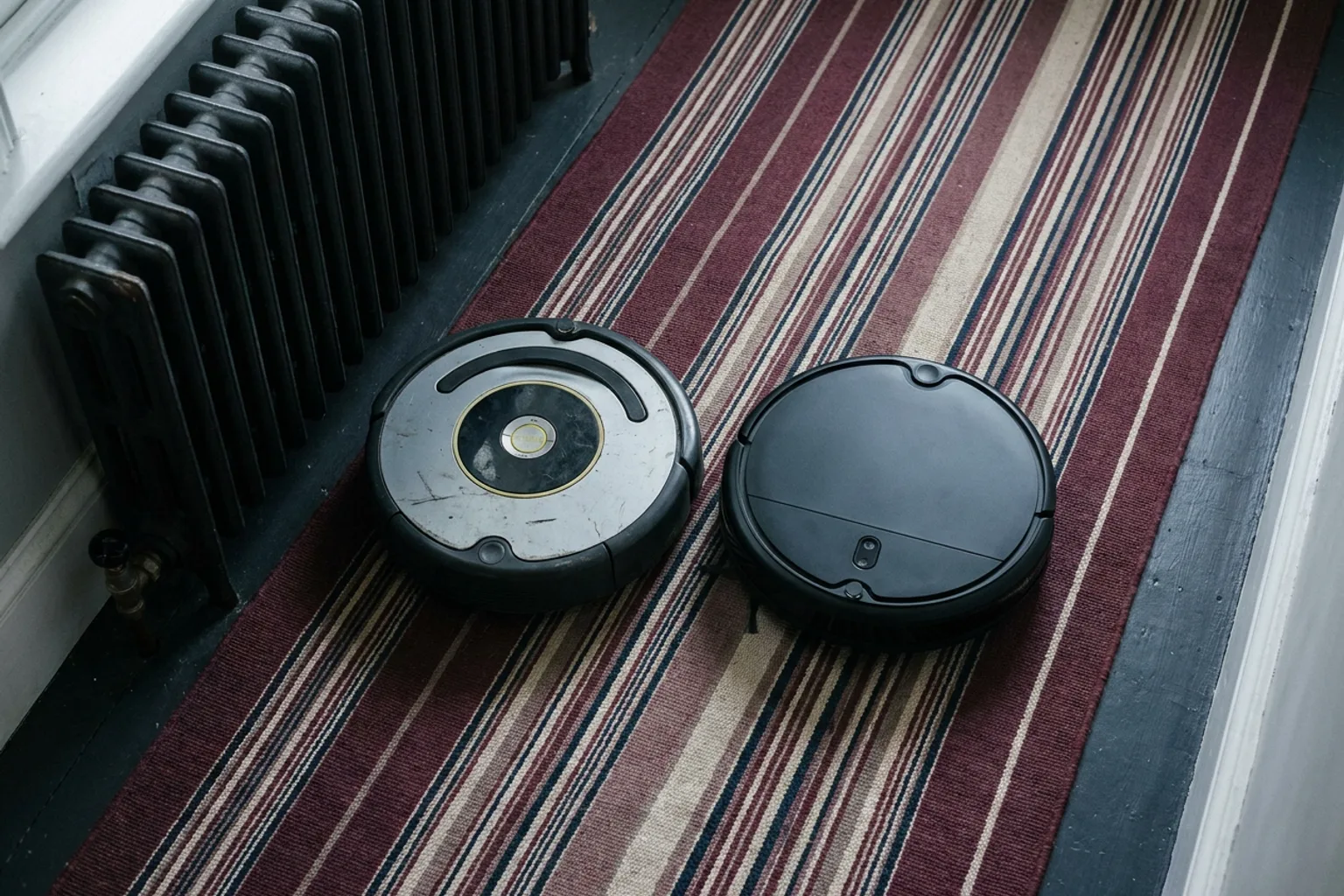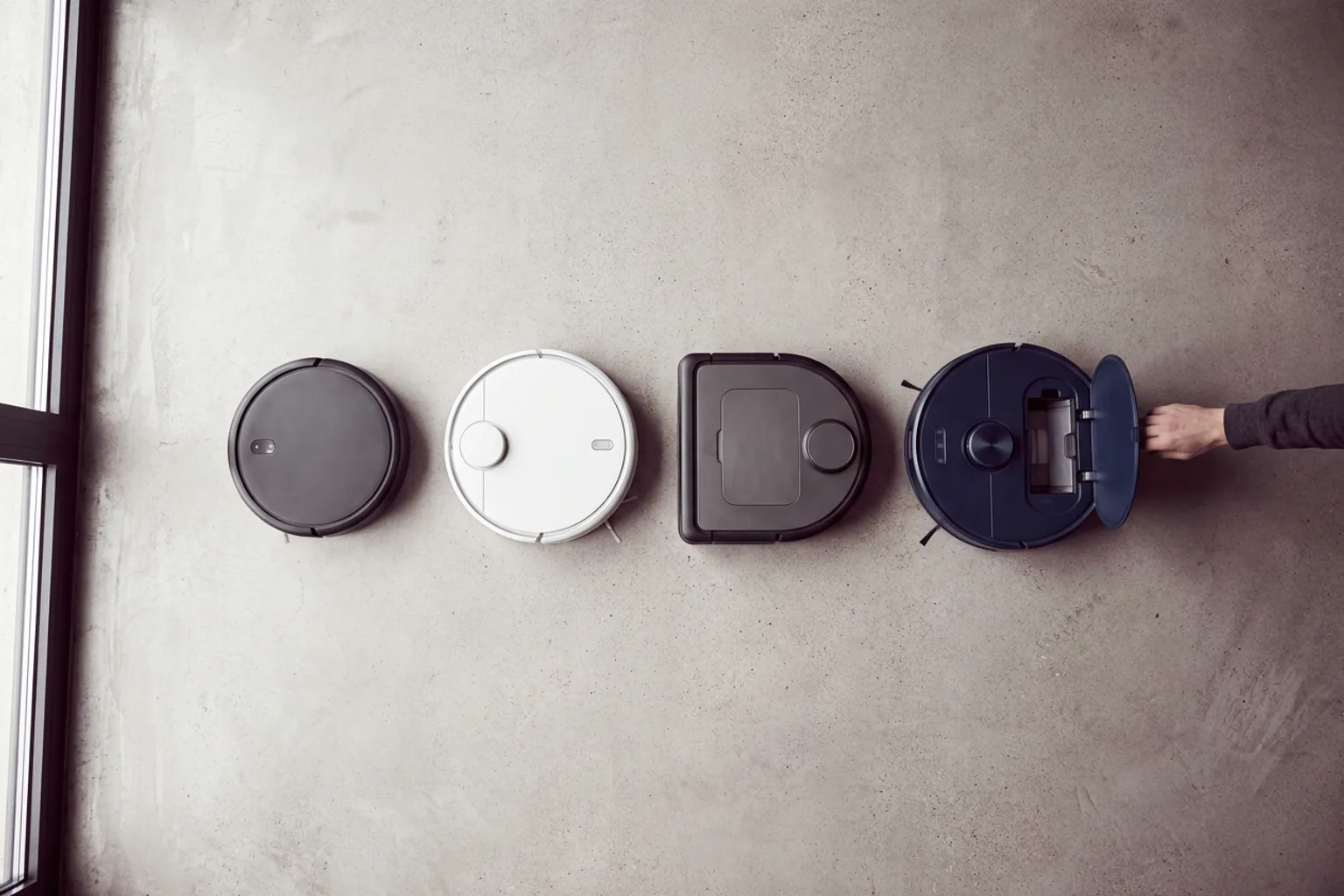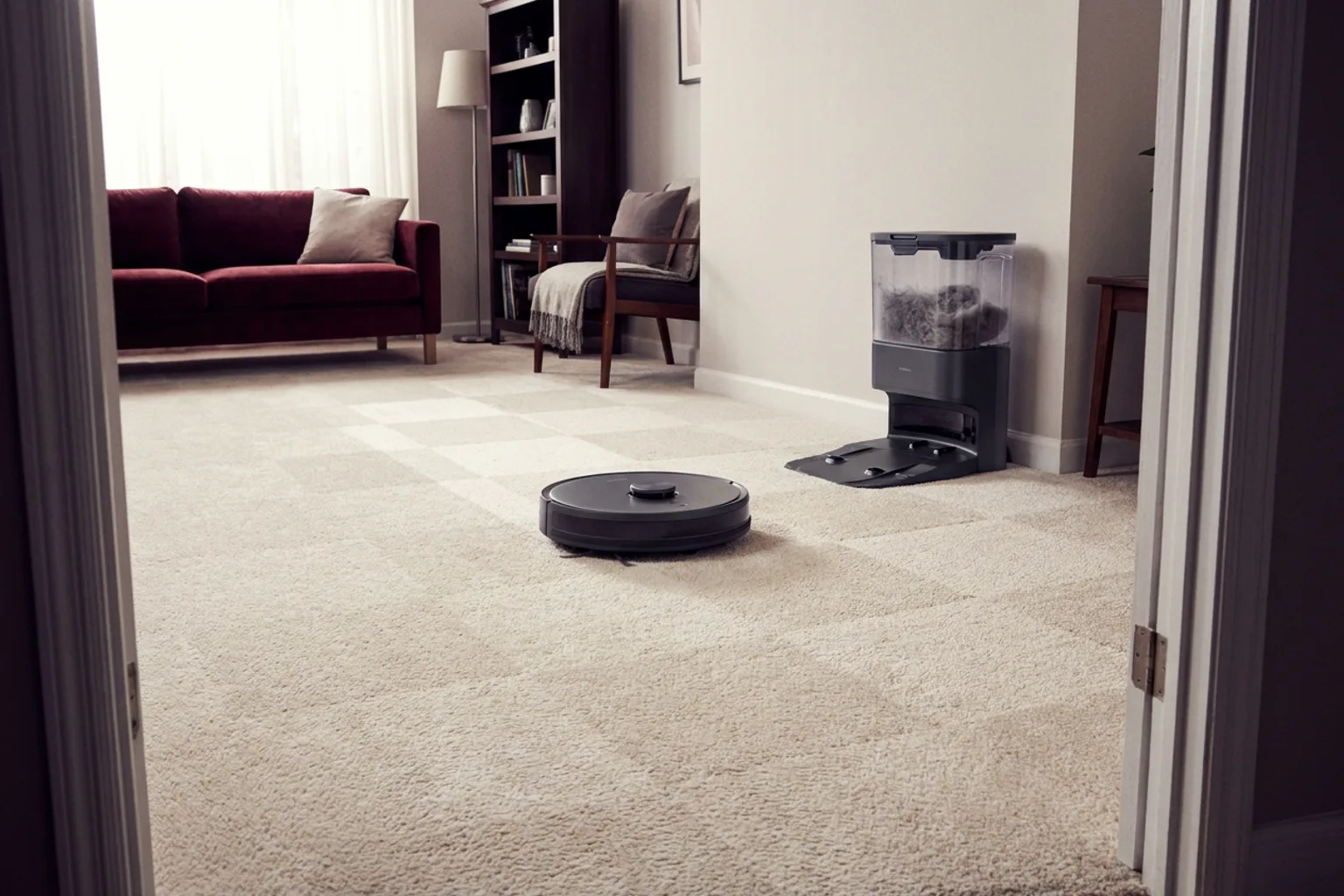
For most US homes, Roborock is the safest starting point: LiDAR mapping on most of its lineup and a model at nearly every price tier. Choose Ecovacs if mopping and a do-everything dock come first. Choose Roomba if your floors are mostly carpet and you like its dual rubber rollers, but confirm current support and warranty terms first. Add eufy to the shortlist when price is the deciding factor.
One caveat shapes everything below. The gap between a brand's budget and flagship models is usually wider than the gap between brands at the same tier. Use the brand verdict to narrow the field, then judge the specific model.
Ecovacs vs Roborock vs Roomba vs eufy at a glance
Brands revise their lineups often, so read each row as a tendency. Confirm the details on the exact model's spec sheet.
| Roborock | Ecovacs (Deebot) | iRobot Roomba | eufy (Anker) | |
|---|---|---|---|---|
| Navigation | LiDAR on most mapped models | LiDAR on most mapped models | Camera-based on many older models; LiDAR on more recent ones | LiDAR on most mapped models; some basic models skip laser maps |
| Mopping hardware | Vibrating pad or twin spinning pads, by series | Twin spinning pads on most Omni models; roller-style mops on some flagships | Combo models; the pad lifts or retracts on some | Spinning pads or a roller mop, by model |
| How suction is listed | Pascals (Pa) | Pascals (Pa) | Usually relative claims, not Pa | Pascals (Pa) |
| Feature to note | Foldable robotic arm on the Saros Z70 | YIKO voice assistant on many models | Dirt Detect and long-running dual rubber rollers | HEPA filter listed on the Omni S2 |
| Range | Budget Q series to Saros flagships | Budget N series to X-series flagships | Entry models to premium Combo docks | Basic RoboVacs to Omni docks |
| Shortlist it if | You want strong mapping at any budget | Mopping and dock automation come first | Carpet dominates your floors | Price decides |
Where the brands actually differ
Navigation: laser vs camera
LiDAR measures distance with its own laser, so it maps a dark bedroom the same way it maps a sunny kitchen. Camera-led systems depend more on room light, though many add their own illumination.
Roborock, Ecovacs and eufy build most of their mapped models around LiDAR. Roomba relied on cameras for years and has added LiDAR to more recent models, so check which system a given Roomba uses. For the full picture, see how LiDAR, cameras and cliff sensors work together.
Obstacle avoidance: a tier feature, not a brand feature
Cords, socks and pet accidents are where robots get stuck or make a mess. Every brand saves its best camera-based object recognition for its upper models. Entry-level models usually have simpler avoidance.
If your floors are cluttered, pay for a model whose spec sheet names the objects it recognizes, whatever the logo. Roborock's Saros Z70 goes a step further with a foldable five-axis arm designed to move obstacles out of its path.
Carpet and pet hair: look at the brush first
On carpet, the brush roll and how it handles hair matter as much as raw suction. Roomba made dual rubber rollers its signature, and they are designed to resist hair wrap. Roborock uses dual rollers on some models too. All three rivals advertise anti-tangle brushes on many models; Roborock's Q10 X5+, for example, lists a Dual Anti-Tangle System.
Don't line up suction numbers across brands, either. iRobot usually describes suction relative to its own older models rather than in pascals. Brands that do quote Pa each measure it their own way. Treat Pa as a rough tier marker, not a score.
Mopping: the biggest real-world gap
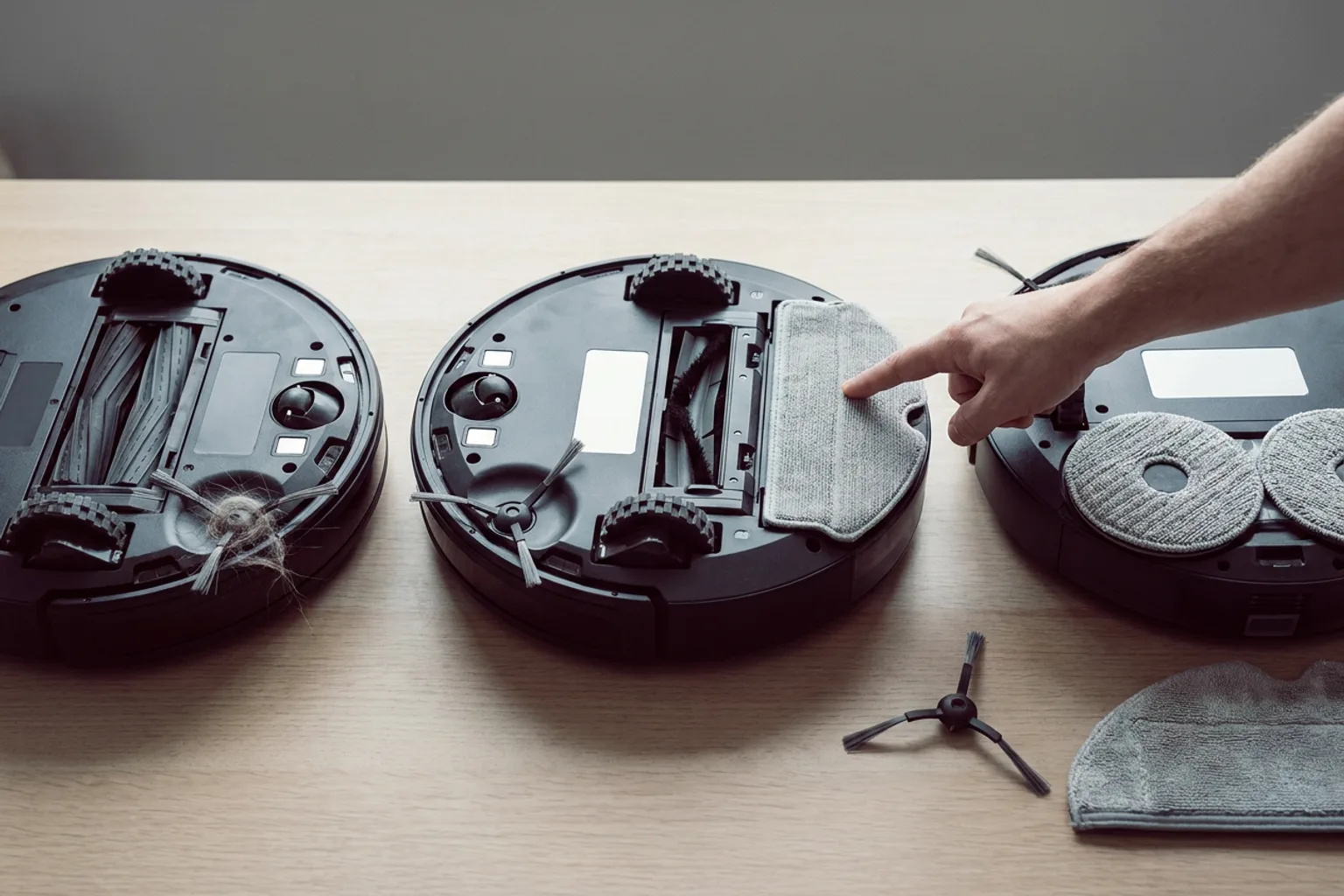
Mop hardware varies far more than vacuum hardware, and it's where these brands split most clearly:
- Vibrating flat pad, such as Roborock's VibraRise 2.0 on the Q10 S5+: scrubs in place and lifts on supported models.
- Twin spinning pads, common on Ecovacs Omni models, Roborock's Qrevo line and some eufy models: more pressure on dried spots. On some models, a pad swings out to reach edges.
- Roller mops, on some Ecovacs and eufy flagships: some models rinse the roller during the run.
- Lifting or retracting pads on some Roomba Combo models, which keep the pad off carpet.
If you have rugs, compare how high the mop lifts, or whether it detaches, with your rug's pile height. If mopping is the main reason you're buying, our vacuum-and-mop combo guide covers pad types and docks in depth.
Docks and running costs
All four brands sell everything from plain charging bases to all-in-one docks. The top docks empty the bin, wash and dry the mop, and refill the robot's water tank. Some wash with hot water: the Roomba Max 875's AutoWash Dock, for example, lists mopping and washing at 80°C (about 176°F).
When two similar models from different brands are close, running costs can settle it. Price out dust bags, filters, main and side brushes, mop pads and any dock cleaning solution. Then confirm that US retailers stock them for your exact model.
Apps, privacy and support
Each brand's app covers the basics on mapped models: room maps, no-go zones, schedules and room-by-room cleaning. If a model has a front camera, check whether you can switch off photo uploads or remote viewing, and read the privacy policy.
Support deserves more attention than it usually gets. iRobot's finances and ownership have been in the news. If you're leaning toward a Roomba, confirm the warranty length and who handles repairs. Also check whether parts and app updates are still available for that model. Our robot vacuum news roundup tracks changes like these.
For any brand, check whether the battery is covered by the warranty and whether repairs are mail-in.
Which brand fits your home
- Small apartment, tight budget: an entry-level LiDAR model from any of the four. A real map matters more than the logo, and you can skip a bulky dock if space is tight.
- Carpet-heavy home with a shedding pet: shortlist Roomba and Roborock models with rubber rollers or anti-tangle brushes, plus an auto-empty dock. If toys or accidents end up on the floor, add camera-based obstacle recognition.
- Mostly hard floors mopped daily: look at Ecovacs and Roborock all-in-one docks that wash and dry the pads. If price rules, add eufy's Omni line.
- Multi-level home: a mid-range or better model that saves several floor maps. Confirm the map limit on the spec sheet.
- Cluttered floors or kids' toys: buy the best obstacle recognition you can afford. Roborock's Saros Z70 takes a different approach, moving obstacles instead of only steering around them.
If you'd rather shop by job than by brand, these picks match the most common setups:
Roborock, Roomba and eufy models to compare
These listings show how each brand's approach translates into a specific robot. For an Ecovacs Deebot, run its spec sheet through the checklist below.
- Roborock Q10 S5+: 10,000 Pa suction, VibraRise 2.0 mopping, PreciSense LiDAR and an auto-empty dock.
- Roborock Saros Z70: vacuums and mops, with the foldable five-axis arm described above.
- iRobot Roomba Max 875: AutoWash Dock with 80°C (176°F) mopping and washing, plus a retractable mop cover.
- eufy Omni S2: a robot vacuum with a HEPA filter, worth a look for allergy-conscious homes. Check the listing for dock details.
To line these up spec by spec, use our side-by-side robot vacuum comparison. For a model-level matchup, see Roborock S8 MaxV Ultra vs Roomba j9+.
Checklist before you buy
- Navigation: LiDAR, camera or both, checked on the exact model rather than assumed from the brand.
- Obstacle recognition: does the spec sheet name cords, socks and pet waste?
- Mop lift: lift height or detachable pads, compared with your rug pile.
- Dock: only the functions you'll use, plus its footprint and required clearance. Measure the spot first.
- Running costs: prices and availability of bags, filters, brushes and pads for that model.
- Warranty: length, battery coverage and how repairs are handled.
- App: skim recent app-store reviews, and read the privacy policy if the robot has a camera.
- Price: compare today's price with recent sale prices before checking out.