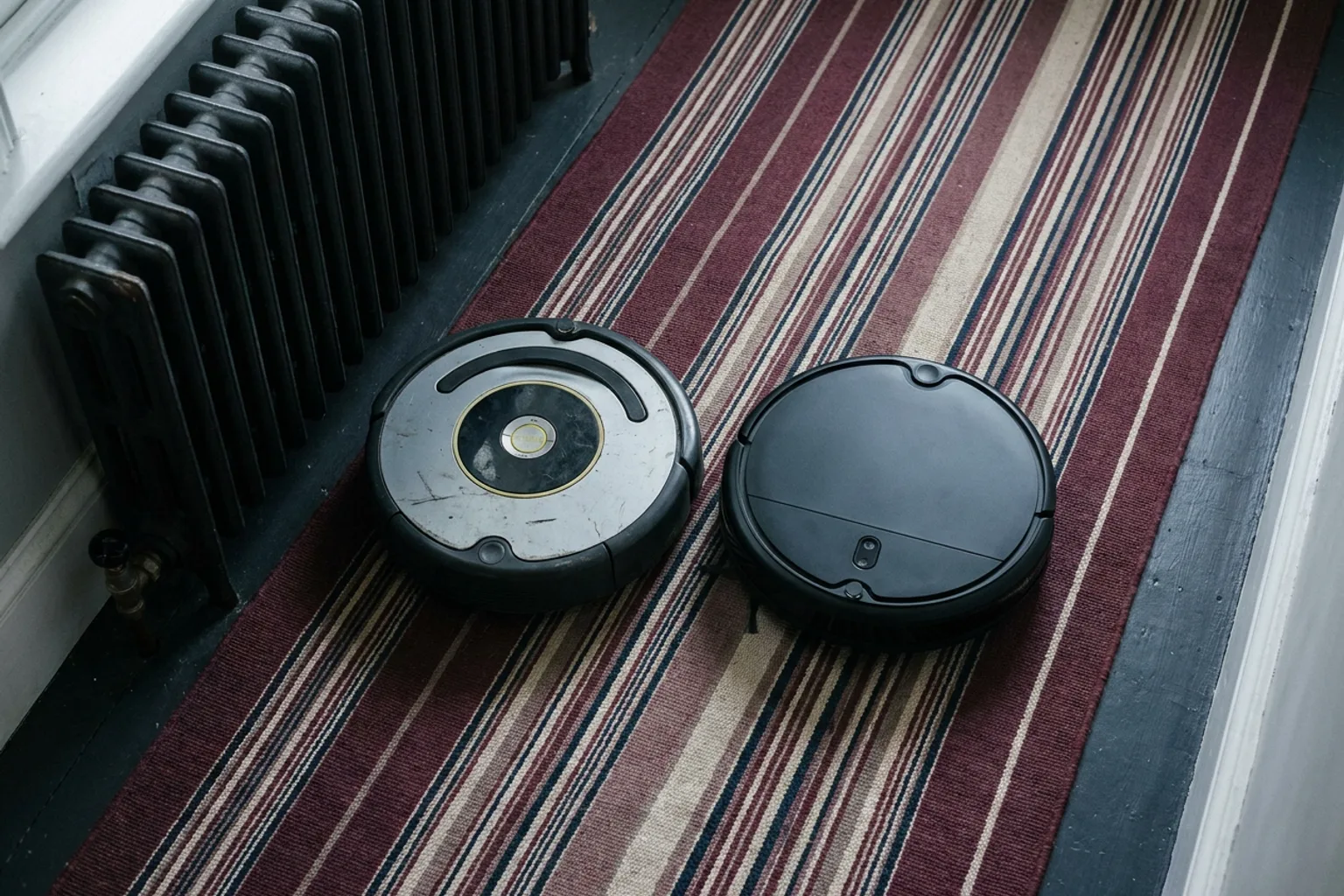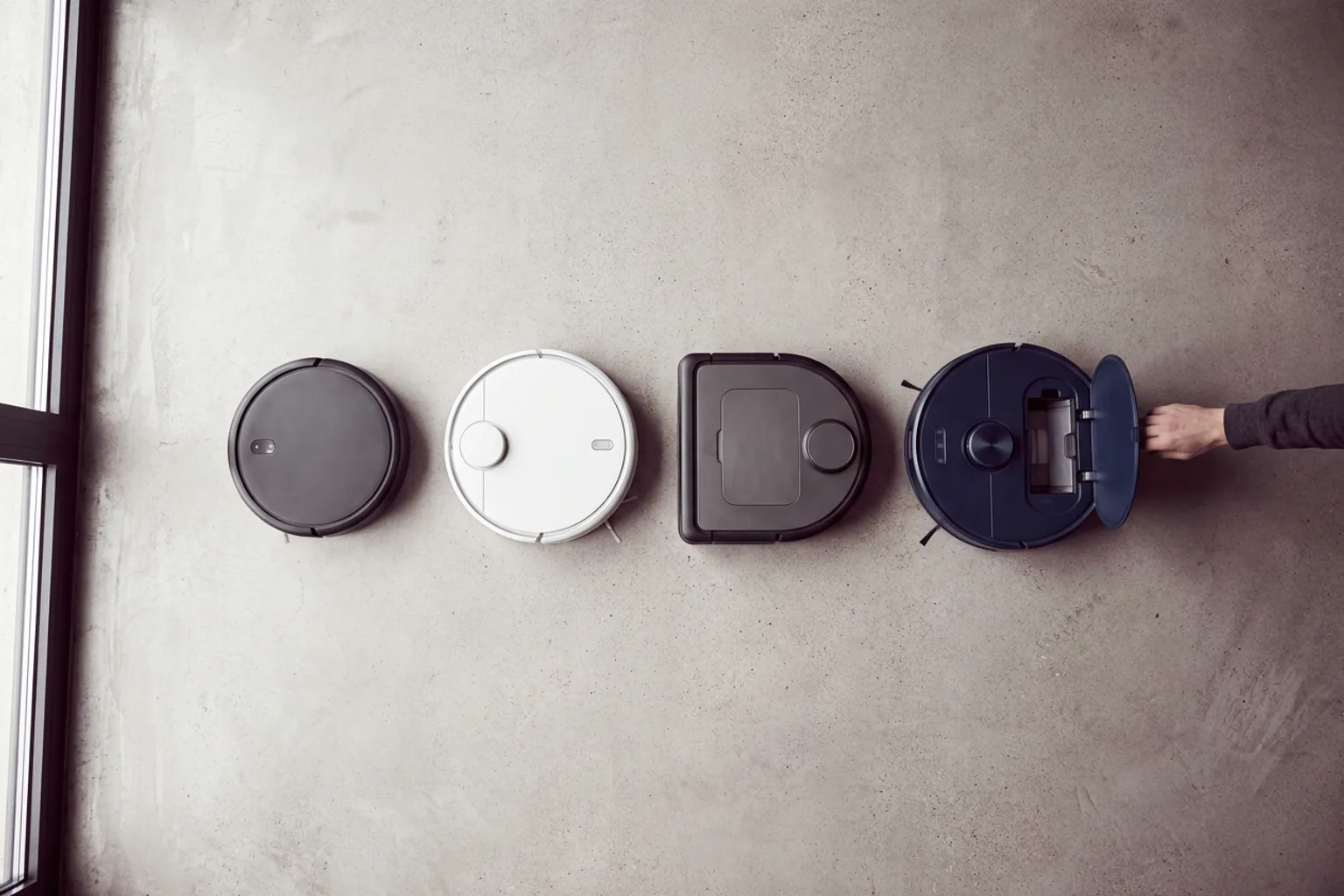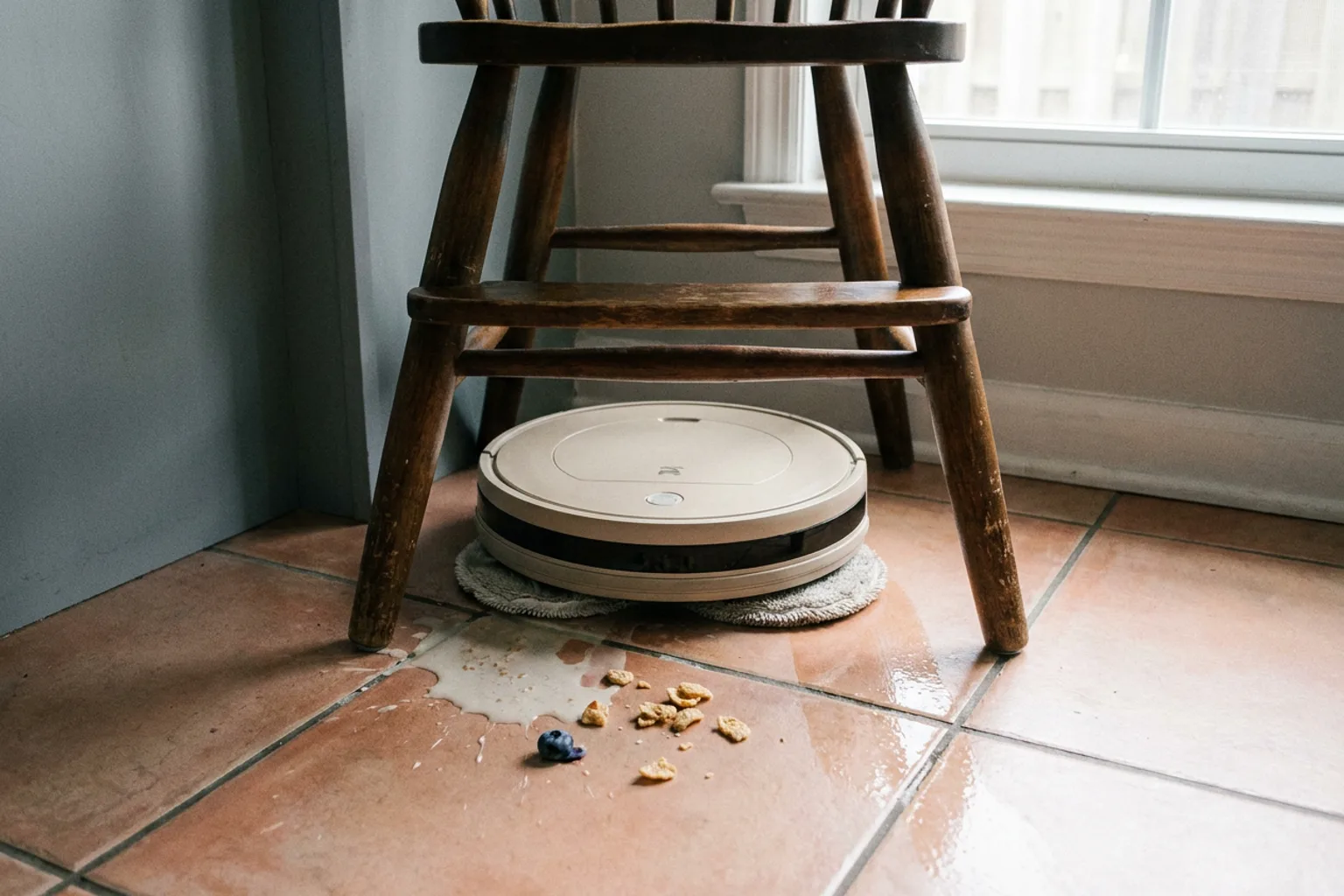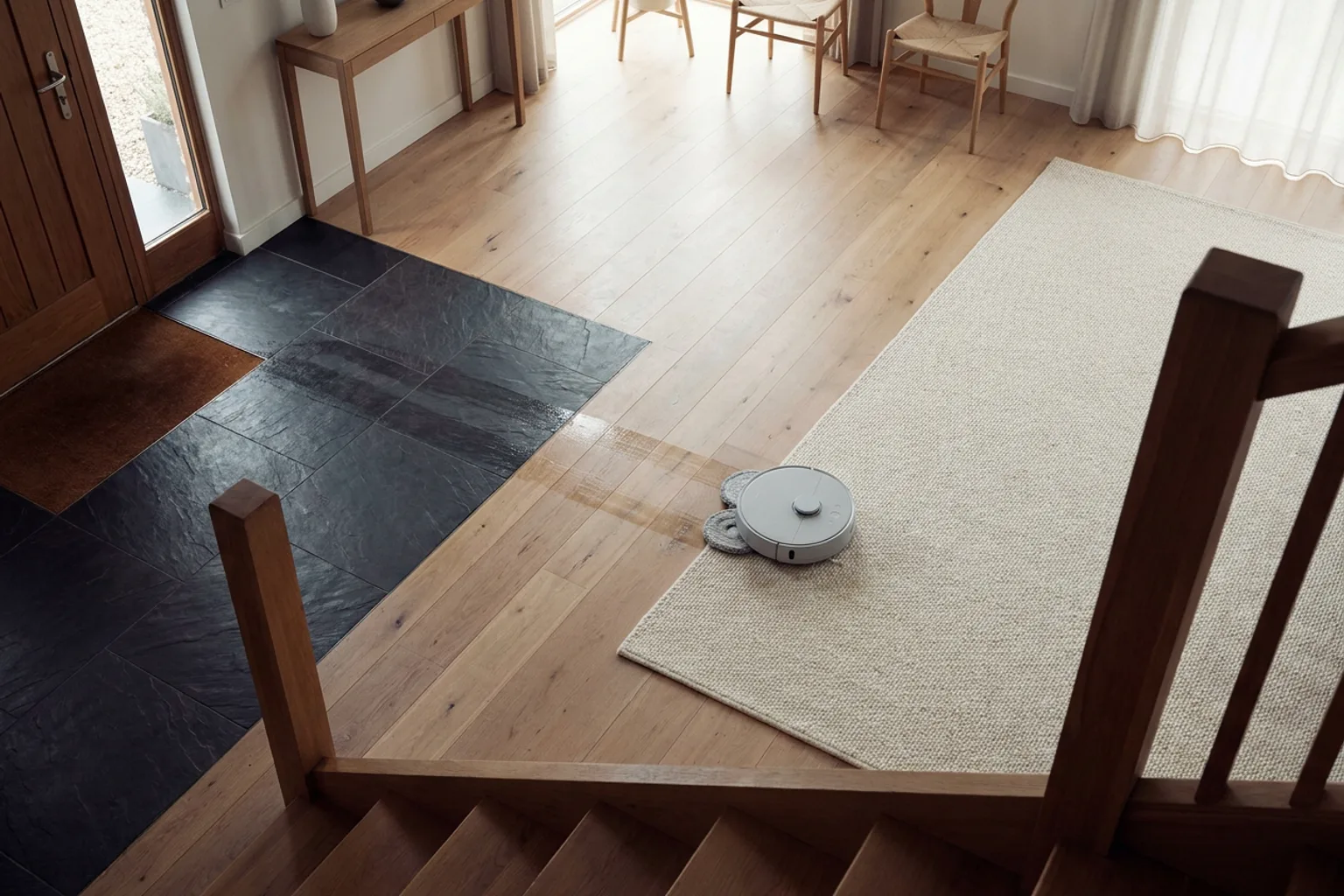
A robot vacuum and mop picks up dust and crumbs, then wipes hard floors with a damp pad, so one scheduled run handles both chores. It's worth buying if most of your home has hard floors and you want them kept clean day to day. It won't replace scrubbing dried-on messes by hand. The real choice is between a simple combo you refill and rinse yourself and one whose dock washes the mop for you.
Why a vacuum-only robot leaves the job half done
A regular robot vacuum handles loose debris. But hard floors also collect things suction can't lift: dried drips by the sink, sticky spots under the high chair, muddy footprints at the back door and the dull film that shows up in afternoon light.
Mopping is the chore that slides. Filling a bucket, wringing a mop and waiting for the floor to dry is easy to put off until the weekend. A separate mopping robot fixes that, but it adds a second dock, a second app and a second set of parts to buy.
How a robot vacuum and mop combo works
Many combos vacuum and mop in the same pass: the brush roll and suction collect debris while a damp pad trails behind. Some can also vacuum first and mop afterward. The robot's map lets you decide which rooms get mopped and which are vacuum-only.
The mopping hardware is where models differ most:
- Drag pad. A flat microfiber pad fed from a water tank. It wipes away dust film and light spots and is typical of compact, lower-priced combos.
- Vibrating pad. The pad moves rapidly back and forth to loosen light grime.
- Dual spinning pads. Two rotating pads pressed against the floor. These are usually paired with a dock that washes them.
- Roller mop. A rotating cylinder found on some models. The robot typically rinses it with clean water as it cleans.
For the mechanics behind mapping, suction and docks, see how robot vacuums work.
Simple combo or self-washing dock?
Most vacuum and mop combo robots fall into one of two camps, and the dock is what separates them.
| Simple combo | Self-washing dock | |
|---|---|---|
| What the dock does | Mainly charges the robot | Washes the mop and refills the robot's tank; many also dry the pads and empty the dust bin |
| Your part | Fill the tank before runs; rinse or swap the pad after | Top up clean water, empty dirty water, wipe the wash tray now and then |
| Footprint | Small base along a wall | Large station that needs its own floor spot |
| Mopping per run | One pad that gets dirtier as it goes | Can usually return mid-run to wash the mop |
| Best for | Smaller homes and light daily mopping | Larger or busy homes with lots of hard flooring |
| Trade-off | More hands-on | Higher price and a bulky dock |
What to check before you buy
Spec sheets for a robotic vacuum and mop combo can run long. These are the details that decide whether one suits your home:
- Carpet handling. See how the robot protects rugs. It may lift the mop, leave the pads at the dock or rely on no-mop zones you draw in the app. If it lifts the mop, compare the listed lift height with the pile of your thickest rug.
- Water control. Adjustable flow and per-room settings let you go light in bedrooms and heavier in the kitchen.
- Tank capacity. Compare the robot's onboard tank with the amount of hard floor you'll mop. On docked models, check the clean-water and dirty-water tanks too. Product pages usually list capacities in milliliters or liters.
- Dock size and clearance. Measure your spot in inches. Leave room in front for the robot to dock and for you to lift the tanks out. If the robot needs to fit under a sofa or bed, check its height as well.
- Running costs. Mop pads, dust bags, filters and brushes wear out. Confirm that the maker or a major US retailer stocks them, and price out a year's supply. If cleaning slips on a robot you already own, a replacement brush and filter kit can restore it without buying a new one.
- Warranty and support. Check how long the warranty lasts, whether it covers the dock and how US repairs or replacements are handled.
Common doubts, answered
"Will it really get my floors clean?"
For routine upkeep, yes. That's the job it's designed for: dust film, footprints, light spills and kitchen drips. Don't expect it to lift dried-on sauce, clean grout lines or erase old stains. Spot-clean those once, then let the robot keep them from building up. For a fuller picture of strengths and limits, read how well robot vacuums work.
"Isn't maintenance just a different chore?"
Partly. Every robotic mop and vacuum combo needs some hands-on care. With a simple combo, you fill the tank and rinse or launder the pad. A self-washing dock shifts that to topping up clean water, emptying dirty water when the app prompts you and wiping the wash tray. Either way, let pads dry fully, because damp microfiber left in a closed space can start to smell.
"Is it worth paying more than for a vacuum-only robot?"
Only if you have enough hard floor to mop. In a mostly carpeted home, a robot mop and vacuum combo leaves its mop idle on most runs, so a self-emptying robot vacuum is the better buy. If you have hardwood, tile or LVP through the kitchen and main living areas, the combo takes over a chore you'd otherwise do by hand.
Pick your type, then compare prices
- Small home, mostly hard floors, fine with rinsing a pad: a simple combo.
- Larger or busy home with lots of hard flooring: a model with a self-washing dock.
- Mostly carpet: a vacuum-only robot.
Once you know the type, choosing a mop and vacuum combo robot comes down to the checklist above and the price. Prices on these robots change often, so check current robot vacuum and mop combo deals before you buy.