Robot vacuums work well as everyday maintenance cleaners. On hard floors and low-pile carpet, a decent model running on a schedule keeps dust, crumbs and pet hair from building up between deeper cleanings. They don't replace a full-size vacuum for deep carpet cleaning, stairs, upholstery or tight corners, and they need a reasonably clear floor to do their job.
So how well do robot vacuum cleaners work compared with an upright or stick vacuum? Think of it as frequency versus depth. A full-size vacuum cleans deeper in a single pass. A robot cleans more lightly but can do it every day while you're out. For most homes, the best setup is both: the robot for daily upkeep and the full-size vacuum for periodic deep cleans.
How well do robot vacuums work on different floors and messes?
How well a robot cleans depends heavily on what it's cleaning. Here's what to expect on common surfaces and messes.
| Surface or mess | How robots usually do | What makes the difference |
|---|---|---|
| Hard floors (wood, tile, vinyl plank, laminate) | Very well | Regular runs; deep grout lines and edges are the weak spots |
| Low-pile carpet, flat-weave rugs | Well | Automatic carpet suction boost, good brush contact |
| Medium- and high-pile carpet, shag | Surface debris only | Pile depth, wheel clearance, whether the robot gets stuck |
| Rugs with fringe or tassels | Often poorly | Fringe wraps around brushes; no-go zones solve it |
| Pet hair | Well, with the right brush | Rubber or tangle-resistant rollers, frequent runs |
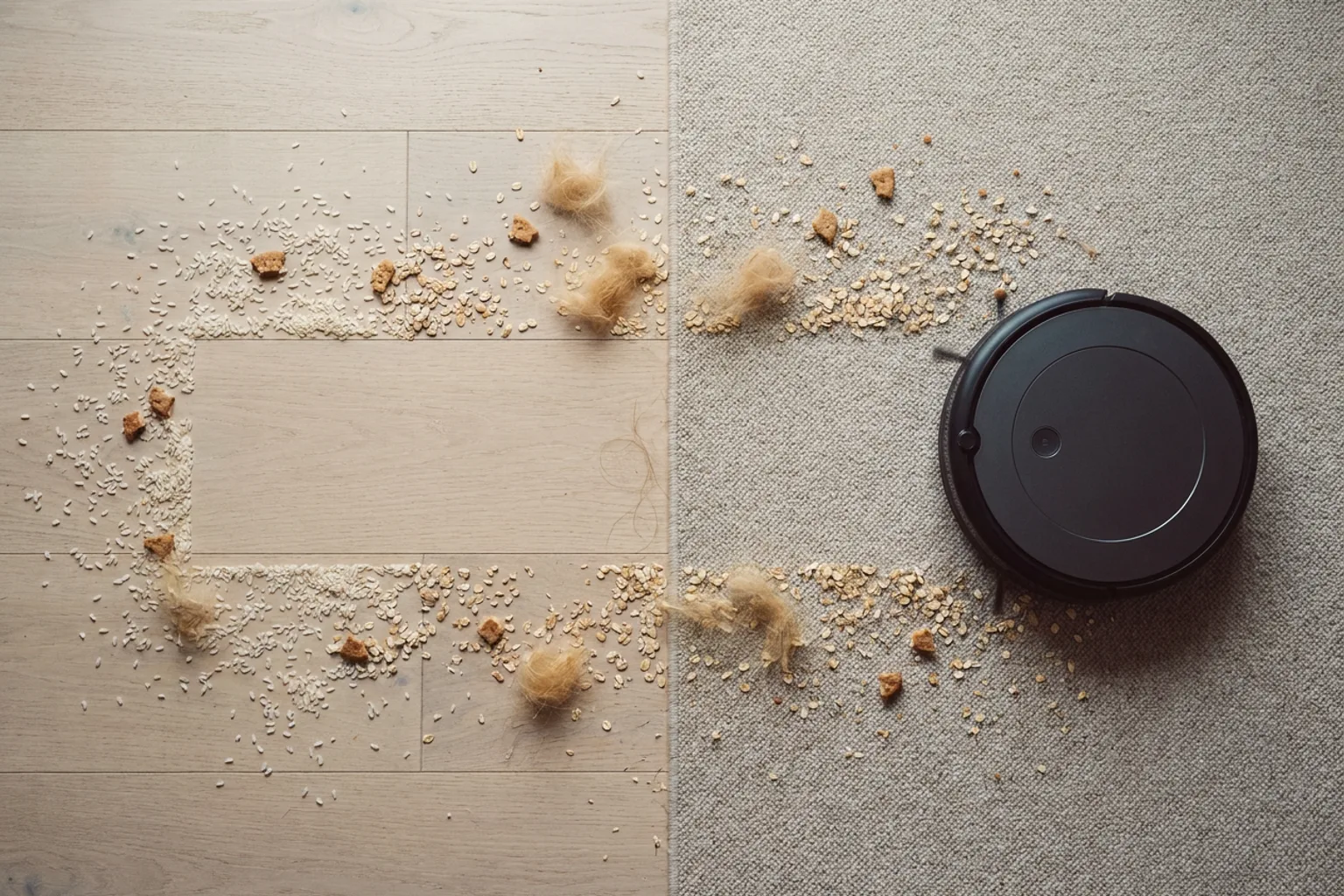
| Larger debris (cereal, kibble, leaves) | Hit or miss | Intake size; robots can push big pieces around |
| Edges and corners | Weakest spot | Round bodies can't reach into right-angle corners |
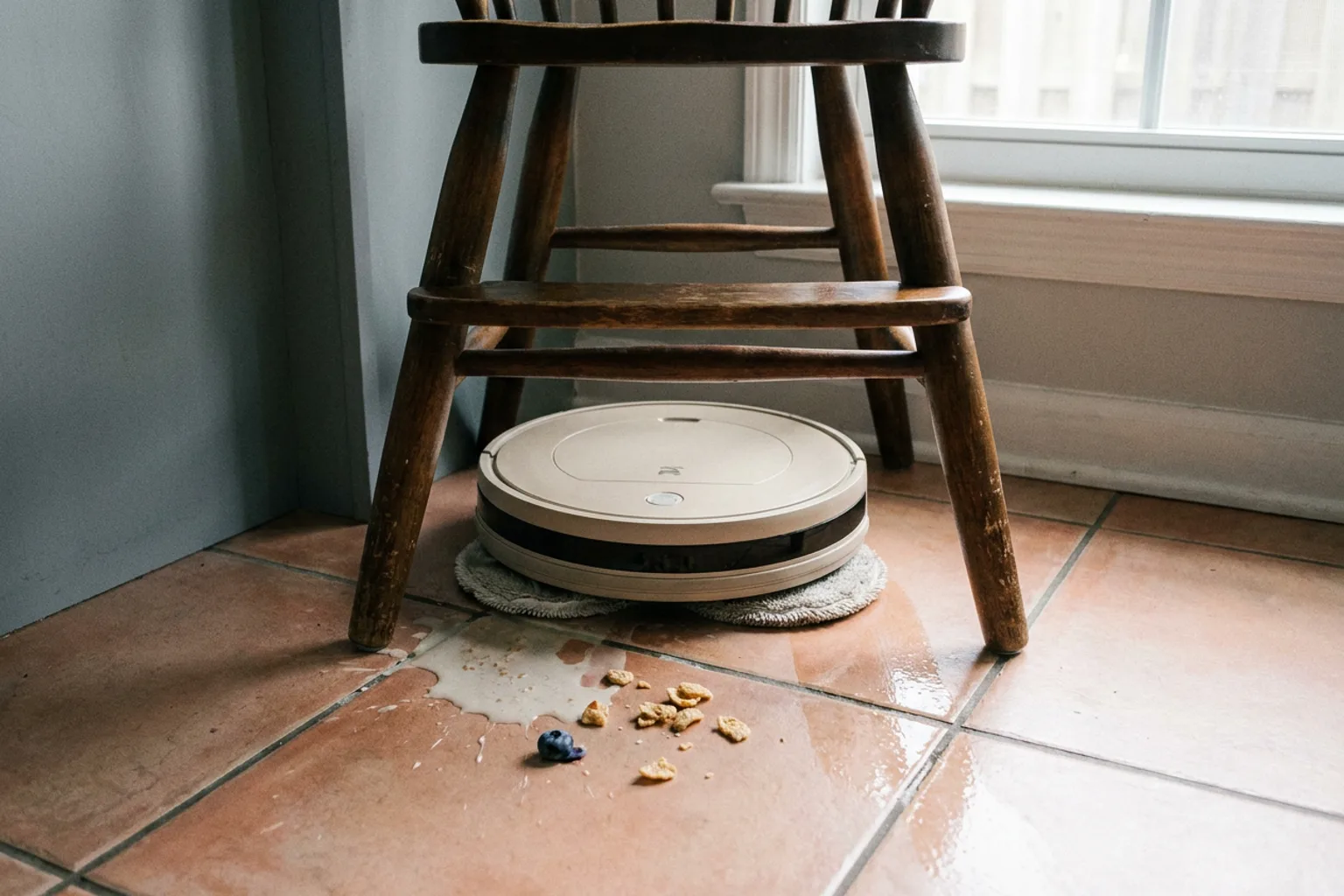
| Liquid spills, pet accidents | Keep the robot away | A vacuum can spread wet messes; detection isn't guaranteed |
| Very dark rugs | Sometimes skipped | Some cliff sensors read dark surfaces as a drop-off |
The pattern is consistent. Robots are strongest at frequent, shallow cleaning of open, flat floors. They lose ground wherever the job needs depth, reach or judgment.
How well do robot vacuums work on carpet?
On carpet, results depend mostly on pile height. A robot's brush roll and suction handle the surface and upper fibers well, which is where hair, crumbs and lint sit. Grit that has worked deep into thick carpet is harder for a compact, battery-powered machine to pull out.
Low-pile carpet and flat rugs
This is where robots hold their own. Look for automatic carpet boost, which raises suction when the robot senses carpet. Then check the spec sheet for the maximum threshold or obstacle height the robot can climb, so rug edges and doorway transitions don't stop it mid-run.
Thick carpet and shag
On deep pile, expect the robot to tidy the surface rather than deep-clean it. Long fibers can slow the wheels, wrap around the brush or trigger a "stuck" error. If most of your home is plush wall-to-wall carpet, keep a full-size vacuum in regular rotation and treat the robot as a between-cleans helper.
Mopping robots and carpet
Combo models protect carpet in different ways:
- Some lift the mop pads when they detect carpet.
- Some can leave the pads in the dock.
- Others need carpeted rooms marked as no-mop zones.
Lift height matters on thicker rugs, so compare it with your rug's pile. Our guide to robot vacuum and mop combos compares each model by mop type and dock. Keep mopping expectations realistic, too: a robot mop does light daily wiping, not scrubbing of dried-on stains.
What separates a robot that cleans well from one that doesn't
Two robots with similar specs can perform very differently. These features matter most for results:
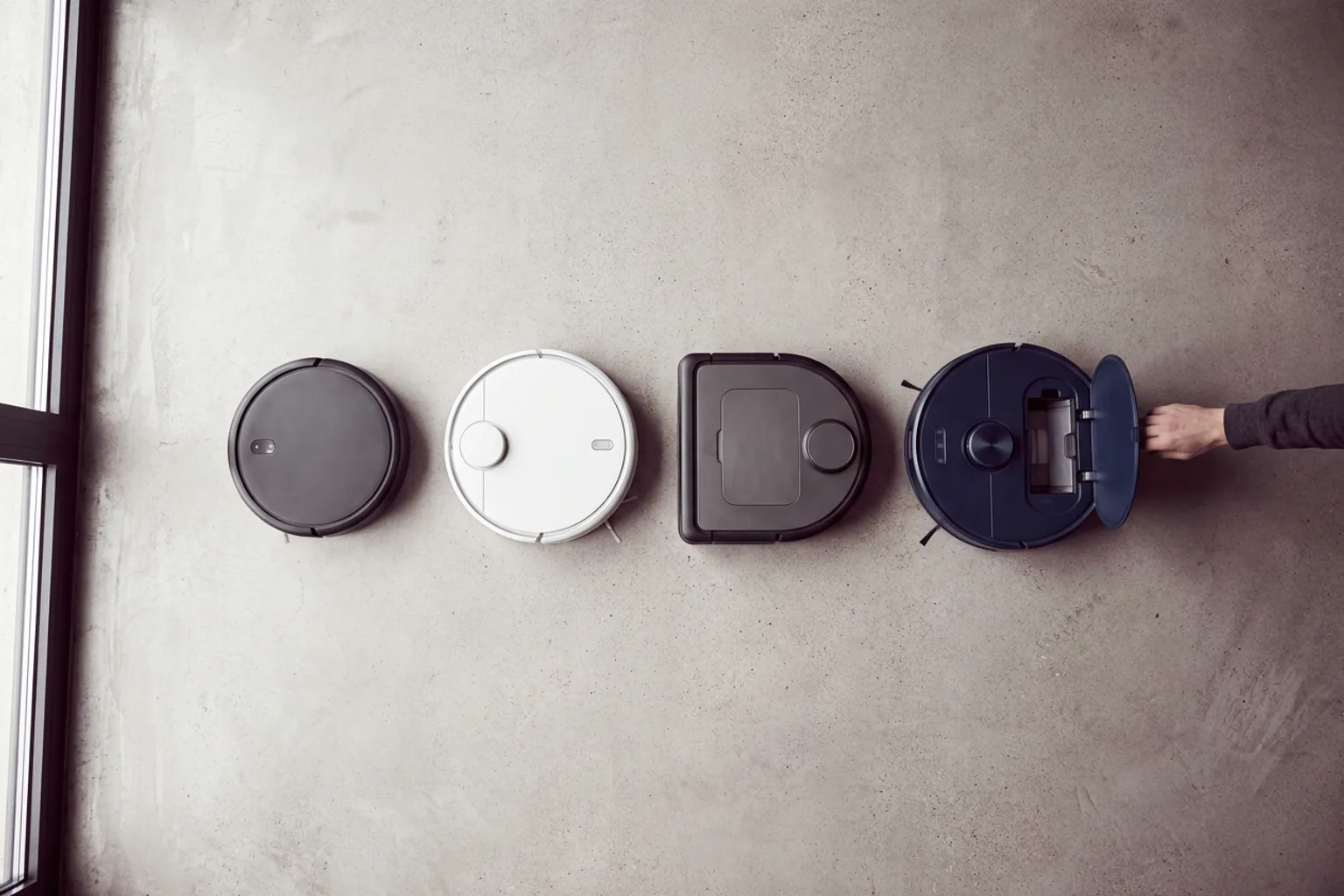
- Navigation. Mapping robots, using lidar or cameras, clean in organized rows, remember room layouts and let you set no-go zones. Basic models that navigate by bumping and gyroscope patterns can take longer and miss spots. For the details, see how robot vacuums navigate and clean.
- Brush design. Rubber or tangle-resistant rollers handle hair better than traditional bristles. That matters in homes with pets or long hair.
- Suction, with a caveat. Manufacturers list suction in pascals (Pa) and measure it their own way. Treat the number as a rough guide within one brand's lineup, not proof that one robot picks up more than another.
- Obstacle avoidance. Cameras or light-based sensors help the robot steer around cords, socks and pet messes. Fewer stuck runs means more floor gets cleaned, but no system catches everything.
- The dock. A robot's onboard bin is small. A self-emptying dock keeps it from filling up mid-run. A self-washing dock rinses the mop pads so they don't smear dirty water around.
Where robot vacuums fall short
Knowing the limits up front prevents most disappointment:
- Corners and edges. Side brushes sweep debris inward, but a thin strip often remains in tight corners and along baseboards.
- Clutter. Cords, chargers, socks, toys and dangling blind cords are common reasons a run fails.
- Low furniture. If the gap under your sofa or bed is lower than the robot, that area stays dusty. Measure the gap with a tape measure and compare it with the robot's listed height. Lidar models often stand taller because of the sensor turret on top.
- Stairs, upholstery and curtains. Robots clean floors only. Cliff sensors keep them from falling down stairs, but the stairs themselves stay a manual job.
- Neglect. Hair-wrapped brushes, a clogged filter or dirty sensors quietly cut performance.
What to expect in three typical homes
These scenarios show how the same technology delivers different results depending on the home.
A one-bedroom apartment with vinyl plank floors and no pets. A basic robot on a daily schedule keeps crumbs and dust in check. You'd still use a stick vacuum on the corners now and then, but you can skip a premium dock.
A single-story home with a shedding dog, hardwood and low-pile area rugs. This home suits a mapped robot with rubber rollers, obstacle avoidance and a self-emptying dock. Daily runs keep hair from drifting into corners and under furniture. An occasional pass with a full-size vacuum on the rugs handles what's embedded.
A home with plush wall-to-wall carpet in most rooms. The robot picks up surface hair and crumbs between cleanings, but the upright still does the heavy lifting. Here a robot is a convenience rather than a replacement, so weigh that before paying for top-tier features.
Matching the robot type to your floors matters more than chasing the biggest numbers on the box. These robot types fit the homes above:
How to get better results from any robot vacuum
A few habits make a bigger difference than most spec upgrades:
- Run it often. Daily or every-other-day runs keep the mess light enough for the robot to handle.
- Do a quick pickup first. Clear cords, socks, toys and loose pet bowls before a scheduled run.
- Use the map. Set no-go zones for fringe rugs, pet bowls and cord clusters. Schedule high-traffic rooms more often.
- Keep it clean. Cut hair off the brushes and empty the bin or dock bag. Rinse or replace the filter as the manual directs, then wipe the sensors and charging contacts.
- Replace worn parts on time. Many robot apps track brush, filter and pad life. When parts are due, a replacement brush and filter kit restores pickup without buying a new robot. Confirm it lists your exact model.
Checklist: will a robot vacuum work well in your home?
A robot is likely a good fit if most of these are true:
- Your floors are mostly hard surfaces or low-pile carpet.
- Floors are reasonably clear of cords, toys and clothes on most days.
- The gaps under your sofa and beds are higher than the robot you're considering.
- Your thresholds and rug edges are within the robot's listed climbing height.
- You have a plan for stairs, upholstery and deep carpet cleaning.
- If you have pets, the robot has tangle-resistant rollers and obstacle avoidance.
- You'll spend a few minutes each week on brushes, filters and sensors.
- You're comfortable setting no-go zones for fringe rugs, pet bowls or very dark rugs.
If you checked most of these, a robot will likely keep your floors cleaner day to day with little effort. To compare models side by side, browse the full robot vacuum catalog.